Reduced
Server billsCASE STUDY
Lower server bills. Smarter cloud.
OMNISOFT successfully reduced server bills in cloud infrastructure. A focused optimization story built around understanding spend and aligning resources with workload needs.
Cloud
Infrastructure focusRight-sizing
Optimization approachVisibility
Cost review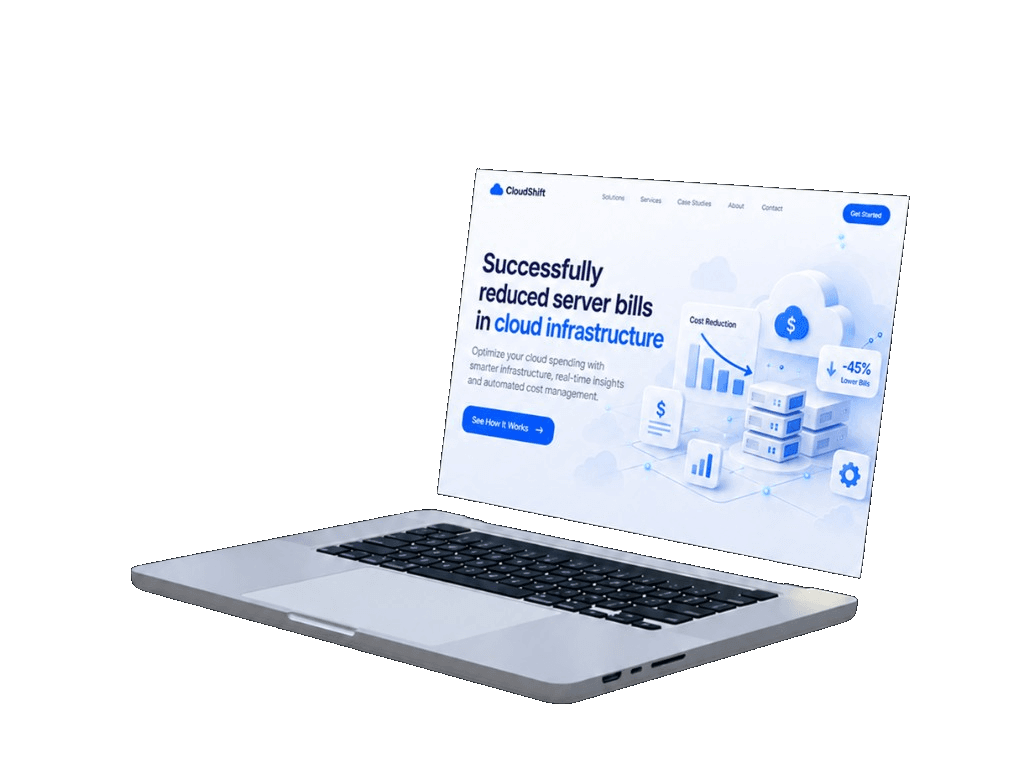
Lower bills
CONFIRMED OUTCOME
Resource fit
OPTIMIZATION FOCUS
Spend review
DECISION SUPPORT
Ongoing
COST AWARENESS

THE PROJECT
Cloud spend should follow the work it supports.
Infrastructure can become more expensive as environments evolve. Provisioned capacity, inactive resources and disconnected ownership can make a server bill difficult to explain, even when the underlying application has not changed in the same way.
The confirmed result for this case is qualitative: server bills were successfully reduced. The story below explains a practical optimization approach without attaching an unsupported amount, percentage, customer identity or time period to that outcome.
THE CHALLENGE
Find the waste without losing the purpose.
A strong approach makes the difficult parts visible before committing to the next step. These are the considerations that shape the work.
Fragmented spend
A bill needs to be connected to services, environments and responsible teams.
Capacity assumptions
Resource choices should be reviewed against actual workload requirements.
Lasting cost awareness
A one-off review needs a repeatable way to notice spend changes.
THE APPROACH
Understand the bill before changing the estate.
The approach connects billing review with resource inventory and workload observation. Potential changes are prioritised by their relevance and operational risk. Right-sizing, cleanup and scheduling are considered where suitable, followed by a review of spend and service health.
DELIVERY FOCUS
What the approach brings together
Practical capabilities and considerations, organised around the purpose of this case.
Billing review
Organise the cloud bill into understandable service and environment categories.
Resource inventory
Connect provisioned servers and related resources to their purpose.
Utilisation review
Use workload observations to question capacity assumptions.
Right-sizing options
Consider resource sizes that better match application requirements.
Inactive resource checks
Review unused capacity and resources that may no longer be needed.
Environment scheduling
Consider when non-production resources need to be available.
Storage review
Assess retention and capacity choices alongside workload needs.
Change prioritisation
Separate straightforward adjustments from changes needing deeper validation.
Health checks
Review application behaviour when infrastructure choices change.
Cost ownership
Define a recurring review and a responsible owner for spend changes.

01 / RESOURCE EFFICIENCY
Match infrastructure to the workload, not the guess.
An optimization review asks what each resource does, when it is needed and how its provisioned capacity relates to the application. That context supports more intentional decisions than treating every line on the bill as an isolated cost.
Supplied cost-reduction illustration.02 / CHANGE PLANNING
Prioritise useful changes and review their impact.
Candidate changes should have a clear rationale and a validation plan. Capacity adjustments, resource cleanup and environment schedules can be considered individually, with service behaviour reviewed alongside expenditure.
Optimization approach · Review sequenceWORKFLOW / APPROACH
- 01Review the bill
- 02Observe workloads
- 03Prioritise changes
- 04Review spend and health
DELIVERY / CONSIDERATIONS
- 01Spend categories / Service and environment
- 02Resource purpose / Workload ownership
- 03Change rationale / Expected trade-offs
- 04Review cadence / Spend and health
03 / ONGOING VISIBILITY
Make cost awareness part of operations.
The next bill should not be a surprise. Grouping spend by purpose and defining a review cadence helps teams discuss changes in context. Ownership and documentation make the reasoning behind infrastructure decisions easier to revisit.
Cost governance · Suggested review viewTHE FOUNDATION
Built around efficiency, visibility and responsible change.
The objective is lower server expenditure with a clear understanding of what infrastructure supports. Supplied mockup figures are illustrative and are not measurements of this case.
THE RESULT
Successfully reduced server bills in cloud infrastructure.
A qualitative cost-reduction outcome. No savings amount or percentage has been supplied for this case.
BUILD A SIMILAR PRODUCT